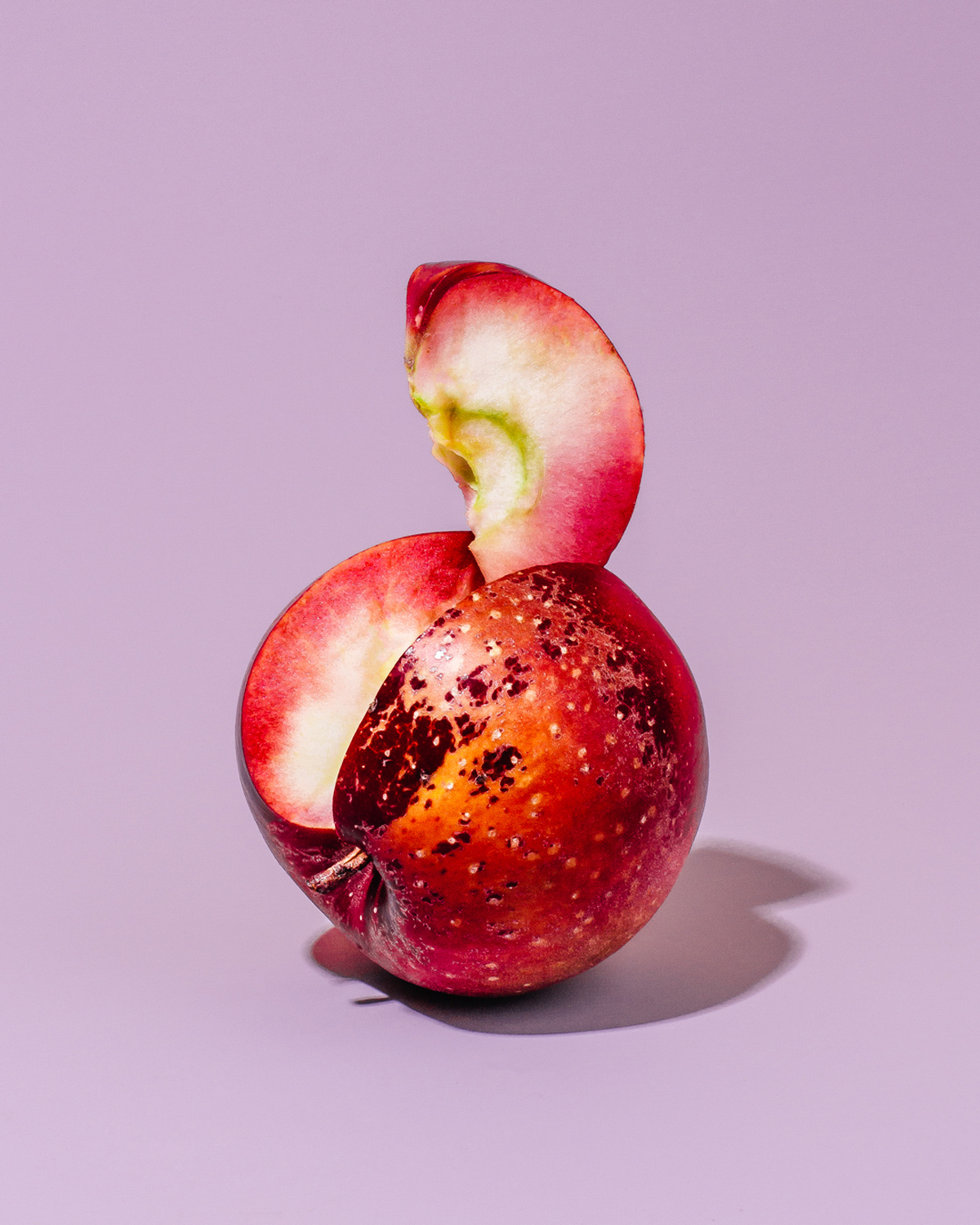
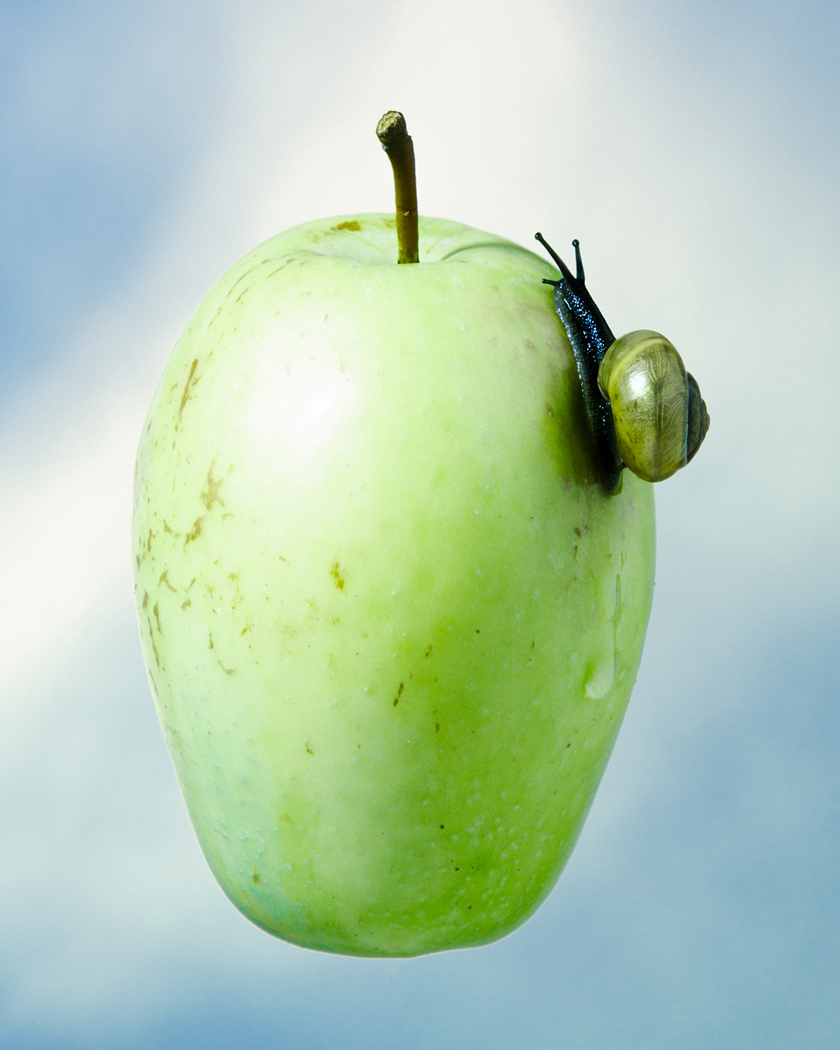
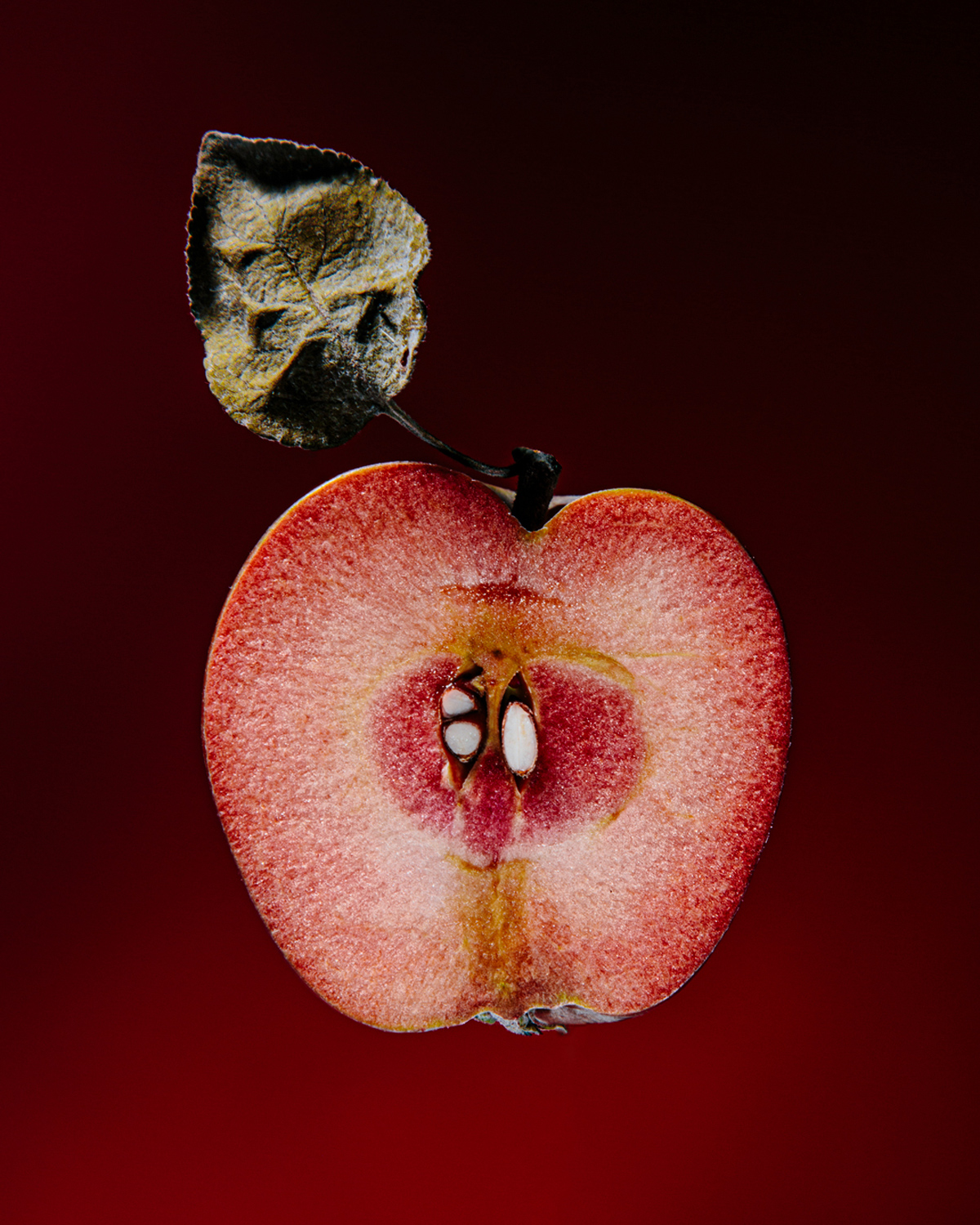
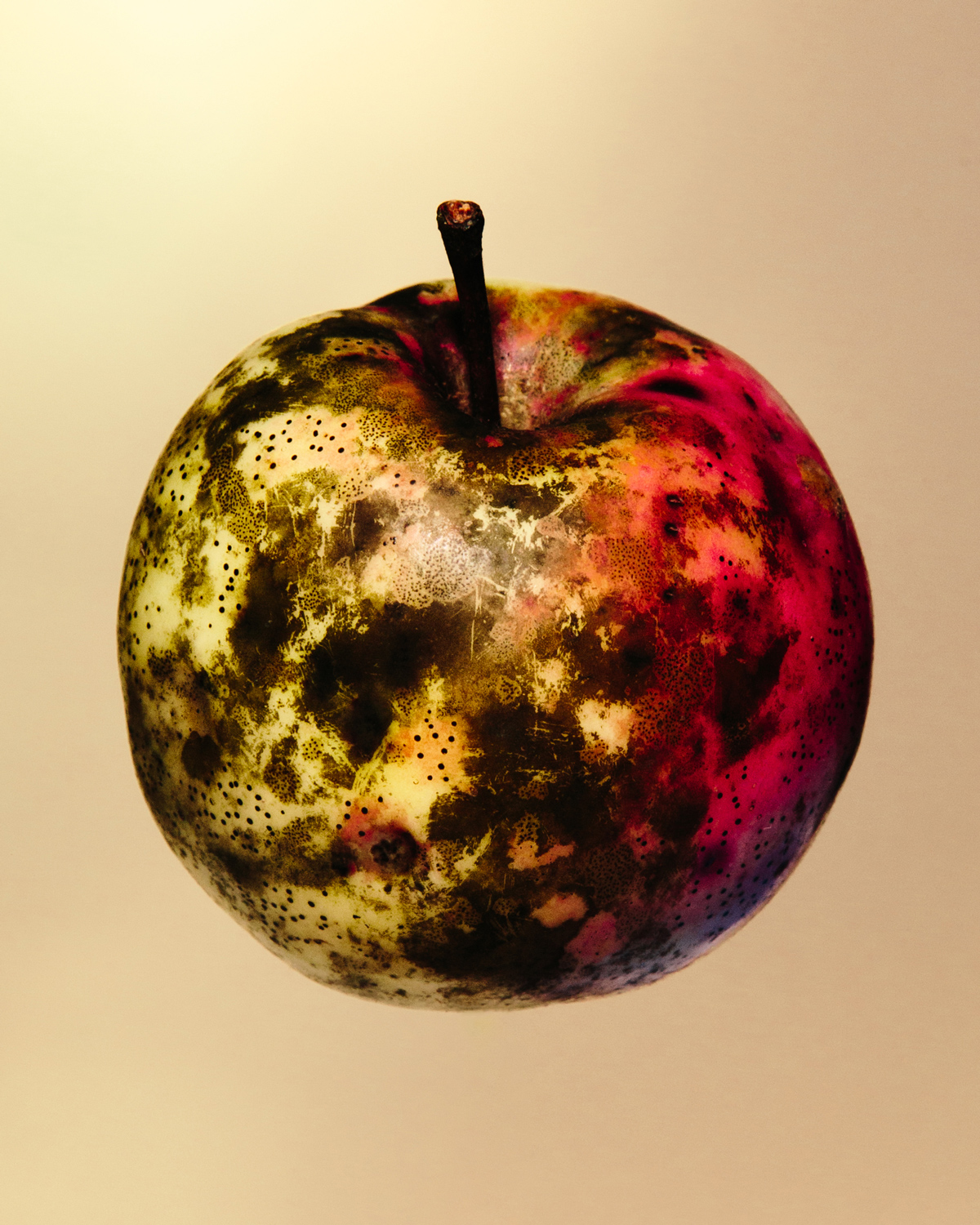
Every time an apple tree grows from seed, an entirely new cultivar is born. Sometimes, the fruit will be extraordinary: its flesh may be pink; its skin could be ghastly white; it could be shaped like a lantern; it could taste like licorice, olives, or memories of poolside sodas and movie theater candy. Anything is possible.
Apples are heterozygotes, meaning they do not grow true from seed. The genome of Malus domestica, the modern eating apple, has between 42,000 and 44,700 genes, and the potential for different characteristic expressions are vast—everything from the soil, climate, and human intervention will shape the way an apple looks and tastes.
The apple first appeared in the forests of the Tian Shan, a mountain range that stretches across Kazakhstan, Kyrgyzstan, and Uzbekistan. At some point in the last few thousand years, we took a bite and began playing a collaborative role in the apple’s future. Since then, we’ve taken the apple everywhere we’ve gone, crossing oceans, valleys, mountain ranges, and even deserts, dispersing their seeds, grafting our favorites onto rootstock, and planting trees anywhere they’ll grow.
There are estimated to be 7,500 known cultivars. Each one has its own unique appearance and flavor. Some look like frogs; some are red inside; some resemble candles; some look like stormy planets, or even stars. The apple is expressive, wild, funny, and strange. It is, in a word, odd. “Odd Apples” is a celebration of this enchanting fruit.
Artist Bios
-
William Mullan
William Mullan works in a chocolate factory, where he learned product photography. One day while eating a Pink Pearl apple, he thought it would be fun to take a portrait of it. One picture led to many, many more, and over the course of three years, he visited orchards and coordinated shipments of fruit from across the country, and spent evenings photographing apples after work. The project culminated in a book called Odd Apples, published by Hatje Cantz in 2021. William continues to photograph “odd” apples and orchard life.
Organizations
-
Photoville
Founded in 2011 in Brooklyn, NY, Photoville was built on the principles of addressing cultural equity and inclusion, which we are always striving for, by ensuring that the artists we exhibit are diverse in gender, class, and race.
In pursuit of its mission, Photoville produces an annual, city-wide open air photography festival in New York City, a wide range of free educational community initiatives, and a nationwide program of public art exhibitions.
By activating public spaces, amplifying visual storytellers, and creating unique and highly innovative exhibition and programming environments, we join the cause of nurturing a new lens of representation.
Through creative partnerships with festivals, city agencies, and other nonprofit organizations, Photoville offers visual storytellers, educators, and students financial support, mentorship, and promotional & production resources, on a range of exhibition opportunities.
For more information about Photoville visit, www.photoville.com
Odd Apples
Featuring: William Mullan
Locations
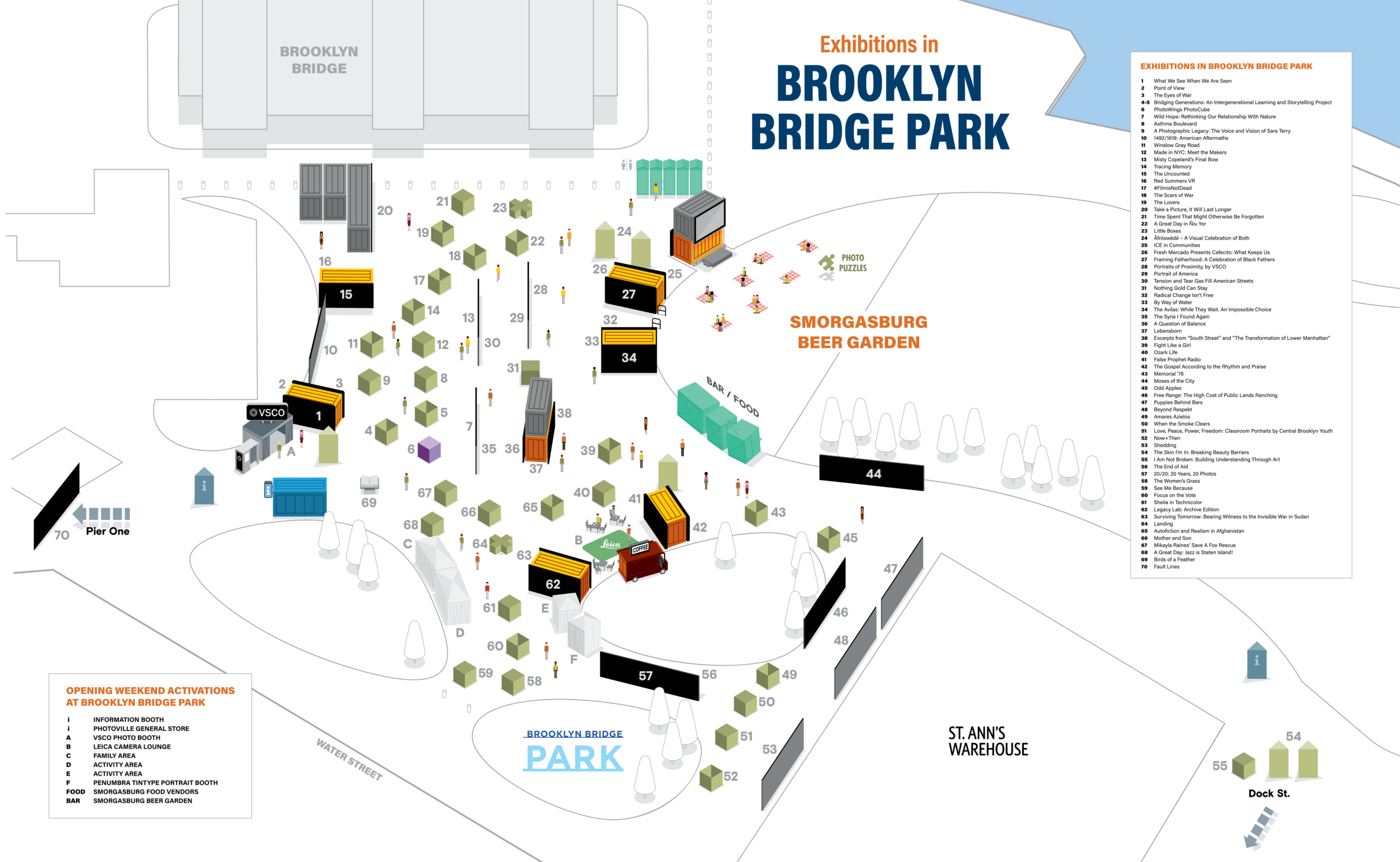
ON VIEW AT: #45
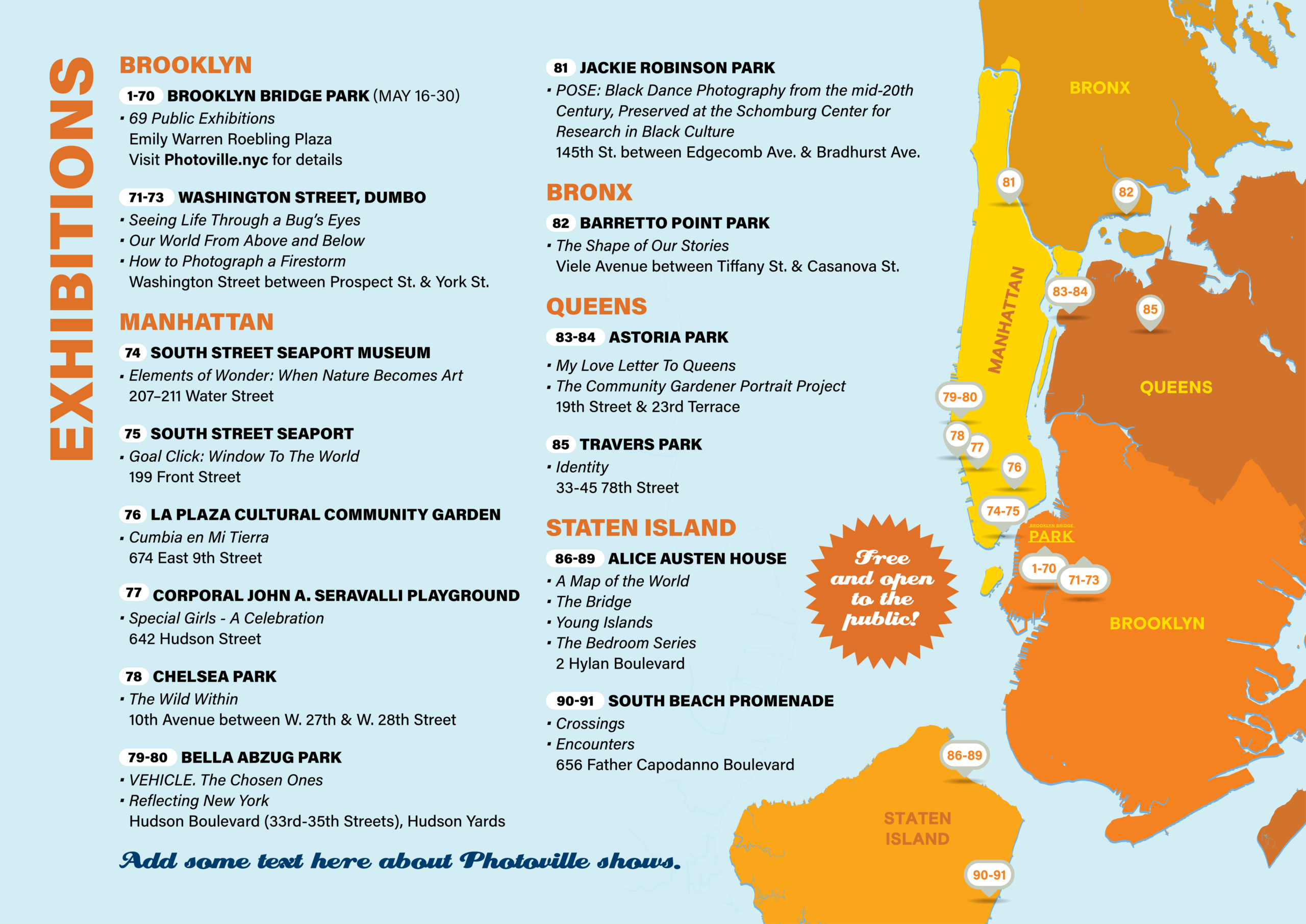
View Location Details Download a detailed map of this location Brooklyn Bridge Park – Emily Warren Roebling Plaza1 Water St
Brooklyn, NY 11201
This location is part of Brooklyn Bridge Park
Explore other locations and exhibitions nearby
The views and opinions expressed in this exhibit are those of the exhibition artists and partners and do not necessarily reflect the views or positions of Photoville or any other participants and partners of the Photoville Festival.