
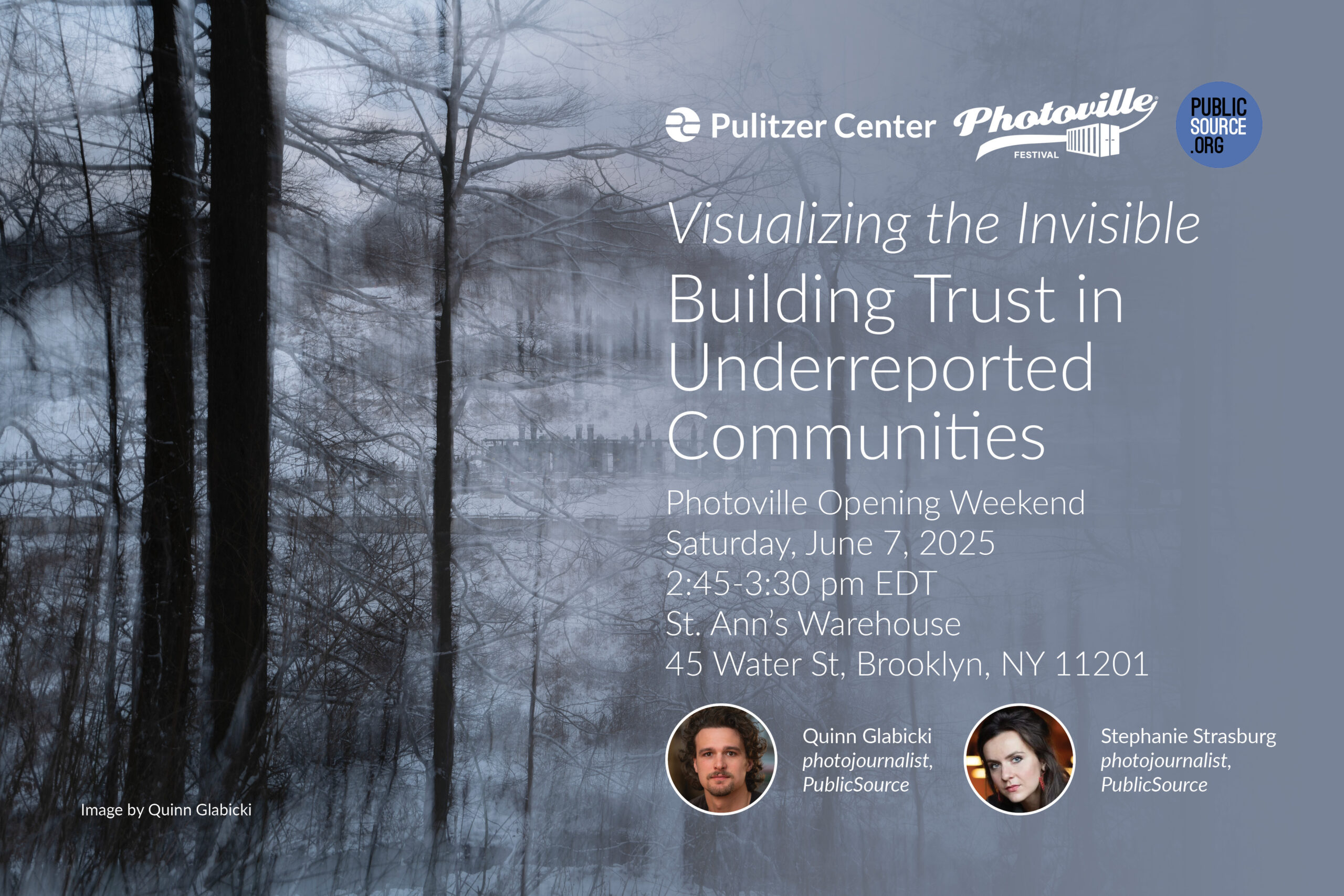
Photojournalist Quinn Glabicki explores how he built trust with vulnerable Appalachian communities confronting the unseen impacts of extractive industries. Join the Pulitzer Center and PublicSource’s Glabicki and Stephanie Strasburg to discuss the power of local news and community-centered, responsive storytelling.
Speakers: Quinn Glabicki Stephanie Strasburg
Location: St. Ann’s Warehouse
Presented by:

Join the Pulitzer Center to explore how photojournalist Quinn Glabicki built trust with local residents to document the everyday impacts of environmental degradation on vulnerable communities. Moderated by Stephanie Strasburg, photojournalist at PublicSource, this panel explores how documentary photography can uniquely capture under-told stories of resilience and injustice—and inspire community-powered action and change.
Pittsburgh gas giant EQT Corporation is the United States’ largest producer of fracked natural gas. Among rural communities in northern Appalachia where the company operates, the harsh realities of gas extraction hit home. In Glabicki’s reporting, “Hollowed Out,” exhibited in Photoville 2025, he chronicles four neighboring families who abandoned their homes after experiencing years of symptoms consistent with exposure to airborne volatile organic compounds.
“These issues exist everywhere at some scale. It’s almost expected: illness in proximity to industry.” Photographer and writer Glabicki asks: “How do we document this banality of horror?”
The conversation will explore building trust with underreported communities and responsibly sharing their stories. Glabicki will share how he creatively visualized unseen health issues and pollution, and harnessed the power of local news to draw attention to these communities’ stories.
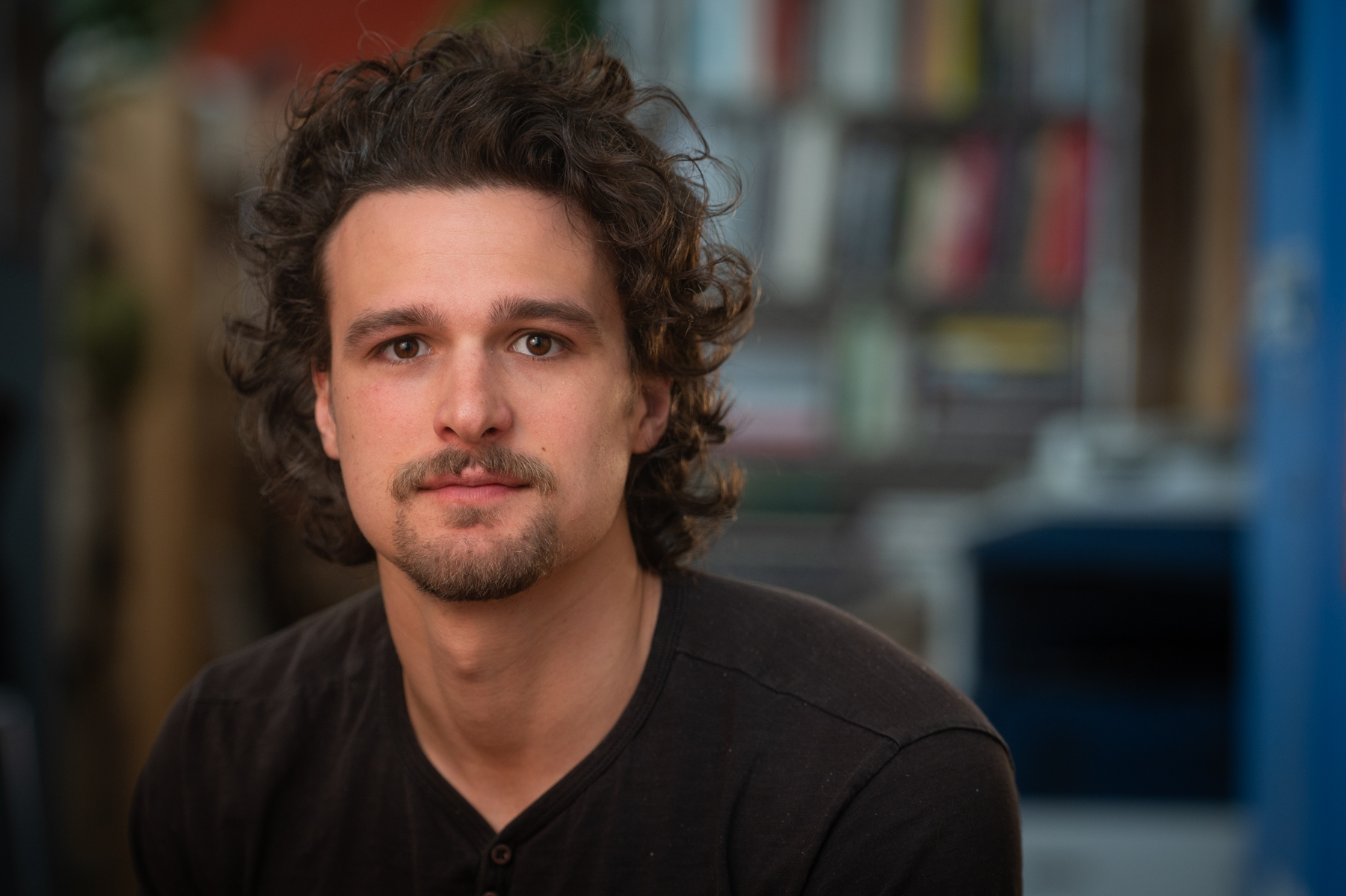
Quinn Glabicki is a photojournalist and writer based in Pittsburgh, Pennsylvania. Born and raised in the Rust Belt, Glabicki’s long-term work focuses on communities impacted by climate change and the footprint of industry in Appalachia. Glabicki’s work has been published by The New York Times, Reuters, The Washington Post, The Wall Street Journal, and The Guardian, among others. Glabicki currently covers climate change and the environment for PublicSource.

Stephanie Strasburg is a photojournalist and filmmaker in Pittsburgh devoted to community journalism, long-term storytelling, and investigative projects. She is currently on staff at the nonprofit newsroom PublicSource, and has been focusing on people impacted by issues of housing and shelter.
The Pulitzer Center makes possible in-depth reporting on important systemic issues, from climate change to health to the impact of AI. We make sure that the journalism reaches the right audiences to inspire curiosity, understanding, and action.
Our grants, trainings, and tools support more than 200 journalism projects each year, published by hundreds of news outlets all over the world. Over our 20-year history, that adds up to 11,000 stories illuminating some of the most urgent, complex issues facing the world today, and the intersections between them.
The journalism we support has led to the repeal of harmful laws, helped change government programs, and borne witness to events and atrocities that otherwise would be hidden from public scrutiny—and garnered the industry’s top accolades, including Pulitzer Prizes and Emmy awards.
Journalism also is a driver of civic engagement. We connect our projects to classrooms, communities, and public forums worldwide, extending impact far beyond publication. As the ways people get their information change, our impact-driven, audience-driven approach is even more necessary for a healthy society.
Breakthrough Journalism, Stronger Communities. That’s been our mission and our passion for two decades. We’re excited to see what the next 20 years bring.
This website was made possible thanks to the generous support and partnership of