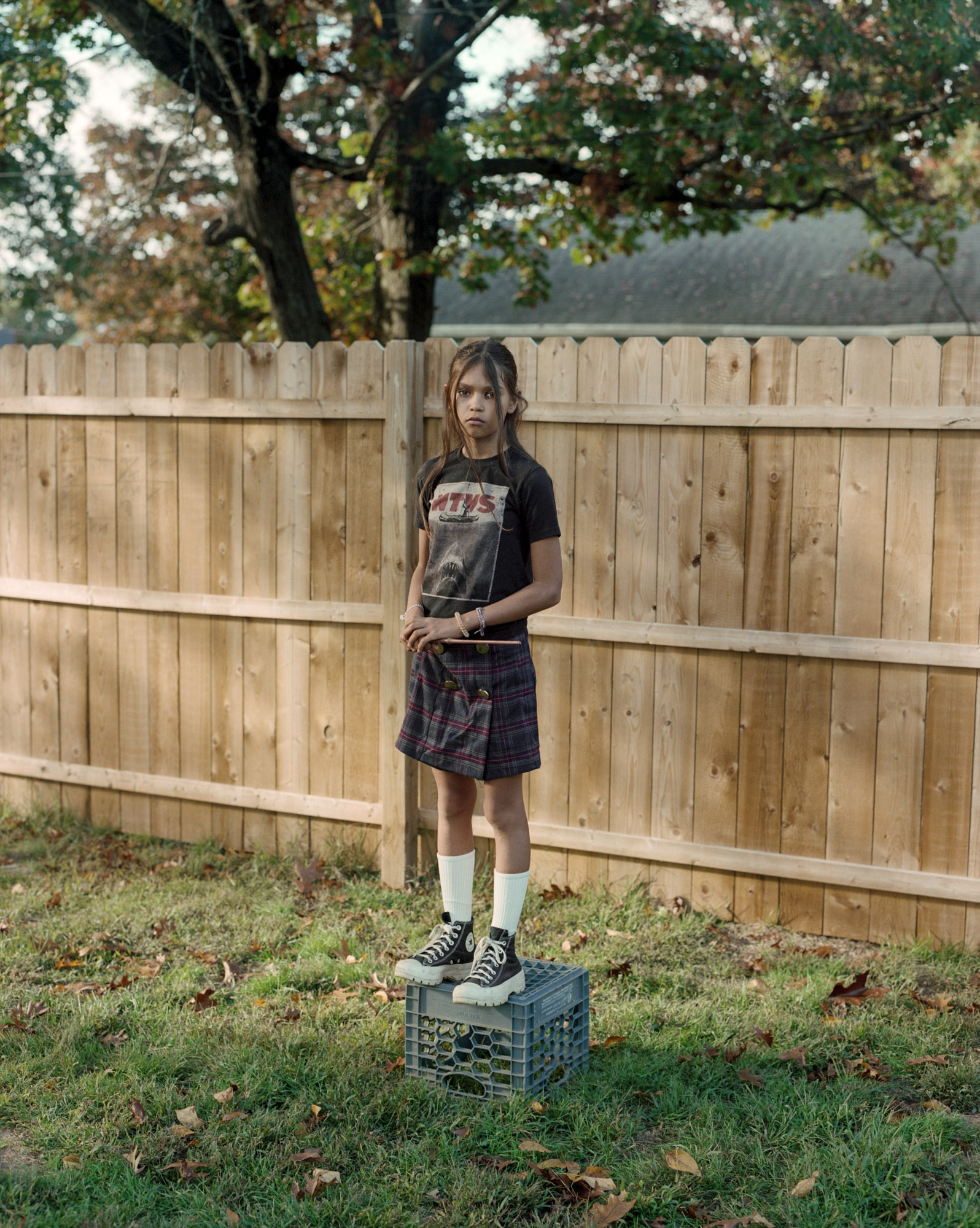
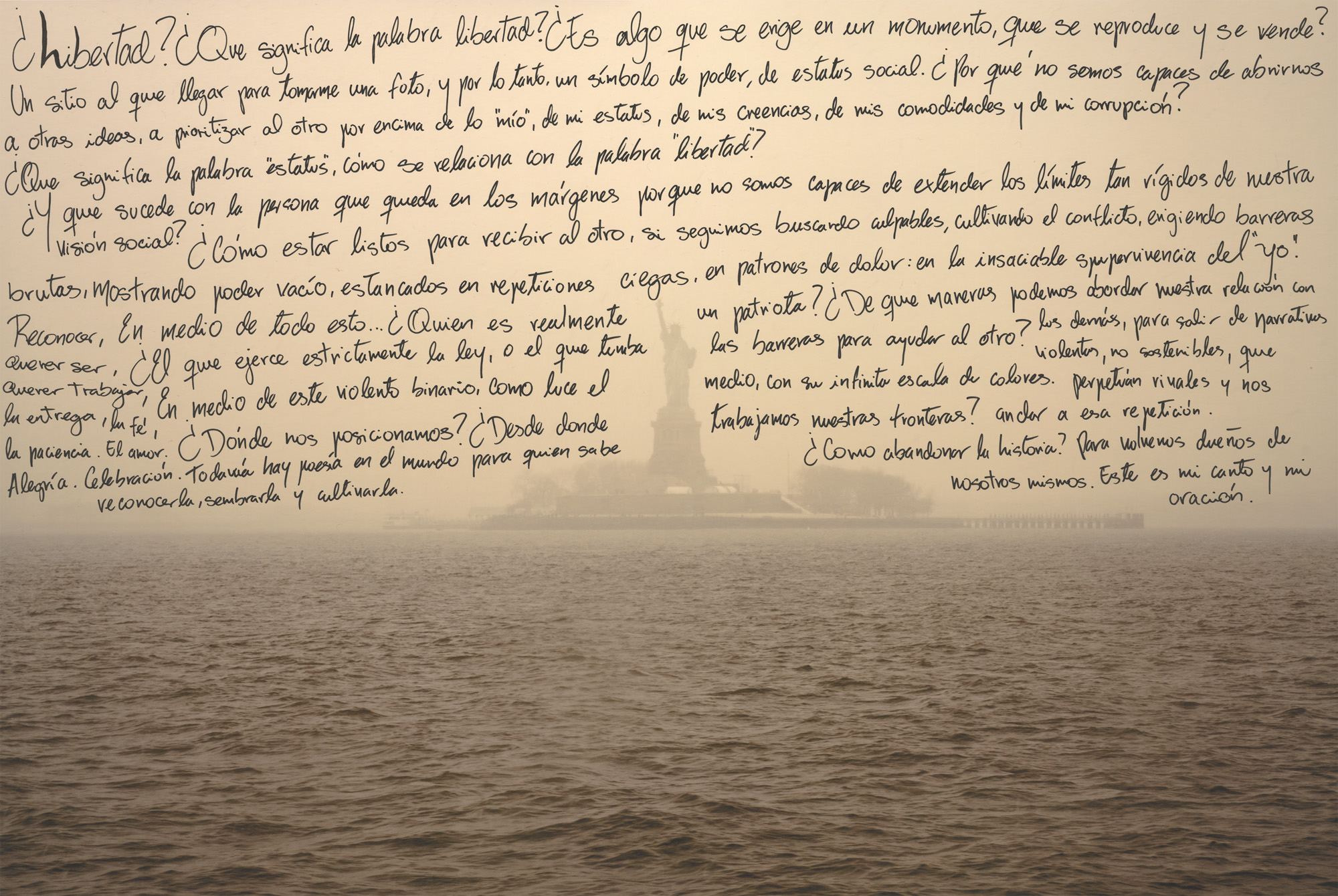
American Aftermaths Grant Winners: Meredith Davenport Kris Graves Justin Maxon Kali Spitzer Raymond Thompson American
Aftermaths Finalists: Doug Barrett Harlan Bozeman Sheila Pree Bright Austin Bryant Gary Burnley Philip Cheung Russel Albert Daniels Phyllis B. Dooney Ne-Dah-Ness Greene Beihua Guo Ruben Hamelink Alexis Hunley Takeisha Jefferson Rachel Loischild Noe Montes Newburgh Community Photo Project Jose Miguel Pareja Jared Ragland Joseph Rushmore Leah Schretenthaler
1492/1619: American Aftermaths presents a landscape of visual narratives about the ongoing reverberations of colonialism and enslavement in the United States. Featuring work produced by 25 photographers—Black, Indigenous, Asian-American, Latino, and white—between 2021 and 2025, “American Aftermaths” reconsiders American history during a momentous chapter in the 21st century, bookended by the murder of George Floyd and Donald Trump’s assault on diversity, equity, and inclusion in the first year of his second term.
The photographers included in this collection are the grant winners and finalists from the special five-year grant cycle, “The 1492/1619: American Aftermaths Grant,” created by The Aftermath Project in response to the murder of Mr. Floyd in 2020. A long-time funder of grants to photographers working on post-conflict stories around the world, the board of The Aftermath Project recognized this moment in time as an opportunity to amplify the voices of photographers grappling with the ongoing, deeply-rooted aftermaths of America’s “original sins.”
In a series of projects that at turns offer new context for the events of the past, interrogate family histories, investigate racial and colonial relationships with the land, and seek models for reconciliation and a better future, the multiple perspectives represented here compel fresh consideration of how America’s narratives are created—and who creates them.
About the Artists
Doug Barrett:
Doug Barrett is owner of 400 North Creative. He is an internationally recognized African American photographer & cinematographer currently based in Kansas. He has work in the permanent collections of the Ulrich Museum and the Mariana Kistler Beach Museum of Art. Doug’s editorial clients include The New York Times, TIME, National Geographic, Politico, Bloomberg News, Smithsonian Magazine, The Washington Post, Wall Street Journal, CNN, AARP, The Chronicle, and has been featured on the Nasdaq billboard in Times Square NYC. Doug has also been featured on VICE, FoxNews, and BBC World News for his work. Doug completed his undergraduate degree at St Augustine’s University and completed graduate school at Southwestern College with an MS in Security Administration.
Harlan Bozeman:
Harlan Bozeman is a photographer from Arkansas and based in New Orleans focusing on the erasure of Black legacies in the American South. He received his bachelors degree in journalism from DePaul University and is currently a Professor of Practice in the Newcomb Art Department at Tulane University. He is interested in how black history is reshaped, documented, and preserved. His current photographic work is based in the Arkansas Delta in the small town of Elaine, Arkansas. His past ongoing work explores Gullah sea islands communities, specifically Wadmalaw Island, where his family is from, and the memories that continue to prolong their cultural significance.
Sheila Pree Bright:
Sheila Pree Bright is an International Photographic Artist and author of #1960Now: Photographs of Civil Rights Activists and Black Lives Matter Protests. She portrays large-scale works that combine a broad range of knowledge of contemporary culture and is known for her series #1960Now, Invisible Empire, Suburbia, Plastic Bodies, and Young Americans.
Bright’s work is included in the book and exhibition Posing Beauty in African American Culture. She appeared in the feature-length documentaries Through the Lens Darkly: Black Photographers and the Emergence of a People(2014) and Election Day: Lens Across America (2016). Her work has been exhibited at the High Museum of Art, Atlanta; Smithsonian National Museum of African American Museum, Washington, DC; Saatchi Gallery, London; Turner Contemporary, London; The Art Gallery of Hamilton, Ontario, Canada; The Lecia Gallery, NY; Harvard Art Museums, Cambridge, MA; International Center of Photography, NY; Southeast Museum of Photography, Daytona Beach, FL; The Museum of Contemporary Art, Cleveland, OH; Virginia Museum of Fine Art, Richmond, VA and Crystal Bridges Museum of American Arts, Bentonville, AR. Her work is featured in The Washington Post and The New York Times.
Austin Bryant:
Austin Bryant is a photographer and writer based in Boston, Massachusetts. His work concerns communities of color and the landscape on which they remain. Through intimate connections with both people and place, he aims to memorialize the histories that have been forsaken or systematically erased.
Gary Burnley:
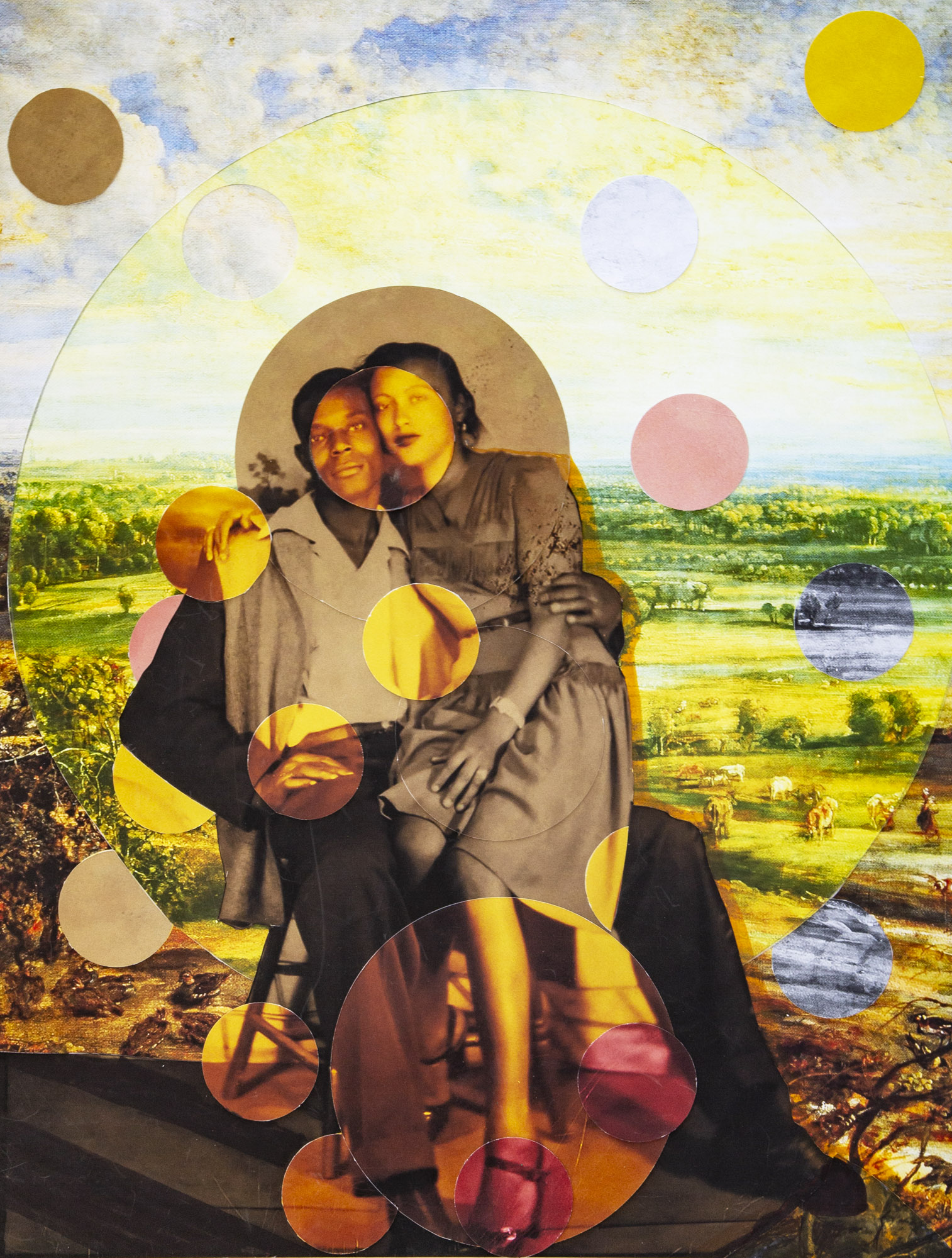
Gary Burnley, born in Saint Louis, Missouri, creates physical collages and stereographic devices that encourage dissociated images to merge in the eye and mind of the viewer. Resulting in optical rivalries that explore representation, memory, and an image’s meaning through contrast and contradiction, his amalgamations imagine strange bedfellows congruent for moments in time, space, and reason. Burnley received a BFA from Washington University in St. Louis and an MFA from Yale University. A 2022 Guggenheim fellow, his work is part of museum and private collections including the Museum of Fine Arts, Houston, Houston, TX; Virginia Museum of Fine Arts, Richmond, VA; Light Work Collection, Syracuse, NY; Hunter Museum of American Art, Chattanooga, TN; and Weatherspoon Art Museum, University of North Carolina. Solo and group exhibitions include Aperture Gallery, NYC; Ogden Museum, New Orleans, LA; Elizabeth Houston Gallery, NYC; Blue Sky Gallery, Portland, OR; Museum of Fine Arts, Houston, Houston, TX; Tbilisi University, Tbilisi, Georgia; Candela Gallery, Richmond, VA; SALON, Florence, Italy; and Artists Space, NYC.
Philip Cheung:
Philip Cheung is a documentary photographer based in Los Angeles. His photographs have been exhibited at venues across North America and Europe, such as the SFO Museum, San Francisco, USA; the National Portrait Gallery, London, UK; and the Canadian War Museum, Ottawa, Canada. He has been awarded grants by the Canada Council for the Arts, the Ontario Arts Council, and the Toronto Arts Council, and was shortlisted for the Aperture Portfolio Prize in 2018. His work has also been recognized by The Magenta Foundation, Communication Arts, PDN’s 30 New and Emerging Photographers and American Photo. His work is held in the collection of Akkasah: Center for Photography/New York University Abu Dhabi. It has been featured in several publications including Harper’s, The British Journal of Photography, Canadian Art, The Washington Post and TIME.
Russel Albert Daniels:
Russel Albert Daniels’s work stands in the currents of art, reportage, and decolonization. Using photographs, he aims to bring visibility to Native American and underserved communities throughout the Interior West and Southwest. His projects explore how identity, sense of place, and history are woven throughout the landscape. His stories about Two Spirit people, missing and murdered Indigenous relatives, defending the Bears Ears National Monument, as well as the legacy of colonial era Indigenous captivity and enslavement have helped to inform and prompt conversation about the historical narrative. Daniels lives in Salt Lake City, Utah.
Meredith Davenport:
Meredith Davenport is an artist and educator living in upstate New York. She earned her MFA from Hunter College and her BFA from the Rochester Institute of Technology. Her work is focused on social justice issues and these documentary projects have appeared in National Geographic, German Geo, The New York Times Magazine and in many other national and international publications. She lived and worked in Latin America for 7 years. She was a location producer and videographer in Colombia for the highly acclaimed HBO documentary Child Soldiers. Her long term work on children poisoned by pesticides on banana plantations in Central America was recognized by UNICEF. Meredith has received a Pew Fellowship, a Puffin Foundation grant, and has been invited to residencies at Yaddo, VCCA, BANFF, Antenna Paper Machine, and the Everson Museum. Her photographs have been exhibited in New York at the International Center of Photography and Union Docs. Her book Theater of War was published in 2014 by Intellect Press and is distributed by the University of Chicago Press. She is an Associate Professor of Photography at the Rochester Institute of Technology.
Phyllis B. Dooney:
Phyllis B. Dooney is a social documentary visual storyteller and educator. Phyllis was honored in 2019 as one of Photo District News (PDN’s) “30 New and Emerging Photographers.” She has an MFA from Duke University’s Experimental & Documentary Arts. Her work has appeared in Lightfield Festival, Click! Photography Festival, The Nasher Museum of Art, The New York Times Magazine, American Photo, The Atlantic, ESPN, The Washington Post, Prison Photography, The Oxford American, and elsewhere. Her first photography book, published by Kehrer Verlag in 2017, Gravity is Stronger Here, was awarded Honorable Mention by The Center for Documentary Studies’ Dorothea Lange-Paul Taylor Prize. Of her work, Phyllis says, “I photograph family; because family tells secrets about the country.”
Kris Graves:
Kris Graves is an artist and publisher based in New York and London. He received his BFA in Visual Arts from SUNY Purchase College and has been published and exhibited globally, including the National Portrait Gallery in London, England; and Aperture Gallery, New York; among others. Permanent collections include the Metropolitan Museum of Art; Schomburg Center; Whitney Musuem of American Art; Guggenheim Museum; Museum of Fine Arts, Houston; Brooklyn Museum; and The Wedge Collection, Toronto; among others. Graves creates artwork that deals with societal problems and aims to use art as a means to inform people about cultural issues. He also works to elevate the representation of people of color in the fine art canon; and to create opportunities for conversation about race, representation, and urban life. Graves creates photographs of landscapes and people to preserve memory.
Ne-Dah-Ness Rose Greene:
Ne-Dah-Ness Rose Greene is an enrolled member of the Leech Lake Band of Ojibwe and owner of Greene Photography LLC and the Native American women’s empowerment campaign, a photography business for women of color. Ne-Dah-Ness is a social justice activist and BIPOC photographer. Her powerful images reveal the unscripted poetry of our human world. The creative design in her art is extremely important. The settings and composition she selects for her photos directs the viewer to focus on the subject matter. Ne-Dah-Ness has a unique way of reaching people through the vision and “voice” of her lens. Her projects and sensitivity toward her subjects are well known internationally and in Indian Country. She is regularly sought out to photograph important events and specialized photoshoots that are culturally based. Her creative intuition and mastery of the camera has Ne-Dah-Ness rising quickly to the top of the competitive field of photography.
Beihua Guo:
Beihua Guo is a Chinese artist based in Arizona and Shanghai. He received a BA in studio art and environmental analysis from Pitzer College, California, and is currently pursuing an MFA at the University of Arizona. His lens-based works explore humanity’s fragile relationship with nature, excavating the unseen and the unheard beyond the landscapes. His work has been exhibited nationally and internationally, including Three Shadows Photography Art Centre, Cleve Carney Museum of Art, Photo Beijing, Photo Open Up International Photography Festival, and Nizhny Tagil Museum of Fine Arts. He is the winning recipient of the Lucie Scholarship Program, Kurt Markus Photography Scholarship Fund, Scholastic Art & Writing Awards Alumni Microgrant, and Janie Moore Greene Scholarship Grant; he has received recognition in the Three Shadows Photography Award, BarTur Photo Award, and PDNedu Student Photo Contest, among others. He has been awarded artist residencies in Petrified Forest National Park, Lassen Volcanic National Park, Yellowstone National Park, Yangshuo Sugar House, and Sunyata Hotel Wuli Village.
Ruben Hamelink:
Ruben Hamelink is a self-taught photographer and filmmaker from Rotterdam, The Netherlands. In his work, he examines how people interact with the historical context of their environment and explores how history shapes the identity of a country and vice versa. By documenting the world around him, he aims to challenge assumptions and prompt viewers to consider their own place in the larger narrative of history. He strives to approach each project with empathy and sensitivity, recognizing that the stories he tells belong not only to the past but also to the present and future. In 2014, Ruben published the photobook Vietnamese Veterans about the men and women who defended Vietnam in four different wars. In 2017 Ruben won the Celeste ‘In Conflict’ Prize for his photo project The Free Runners of Gaza. With his work Living History he won the 2019 Zilveren Camera International Documentary Prize. The project shows how different groups of Americans, each armed with their own version of the past, deal with the history of the American Civil War and the legacy of slavery through reenactment.
Alexis Hunley:
Alexis Hunley is a freelance photographer based in Los Angeles. She started teaching herself photography in 2017, and has since enjoyed producing editorial, lifestyle, documentary, and commercial work for a variety of clients including The New York Times, Rolling Stone, Men’s Health, and New York magazine. Most recently her work was part of a collaborative exhibition between the National Center for Civil and Human Rights, Atlanta Celebrates Photography, and Authority Collective. Propelled by her love for the interplay between science and art, Hunley is naturally drawn to connecting a visual narrative to the psychological facts and figures that fascinate her. Hunley looks for real communion and chemistry between the people she surrounds herself with personally as well as those that she photographs. She has learned to trust her eye as an acute translator of all that is important to her creative process—emotion, shadows, sunlight, color, connection, sensation.
Takeisha Jefferson:
Takeisha Jefferson is an international portrait photographer and artist based in Michigan, whose journey in the arts began as a Public Affairs Specialist in the US Air Force. She honed her craft at Auburn University at Montgomery, where her work began to explore themes of family, Black womanhood, and empowerment. Her Birthright Series reflects a deep passion for art history and cultural storytelling. Jefferson was recently named a 2024 Womxnhouse Artist in Residence and was honored in Photolucida’s Top 50 for 2024. Jefferson’s talent and dedication have led to her participation in over 60 global exhibitions, and her work has received widespread recognition, including a nomination for the Leica Oskar Barnack Award and a feature on Google Arts and Culture. She was also featured in “As We See It—Redefining Black Identity,” a UK-based publication showcasing 30 international artists. Her experiences as a disabled veteran, wife, and mother of four enrich her work with depth and authenticity, as she continues to create art that challenges, empowers, and redefines narratives.
Rachel Loischild:
Rachel Loischild is a Boston-based artist and photographer whose works bring together history, geography, and ephemera to examine race, class, gender, capitalism, climate change, and colonialism, using photography and archival materials to (re)contextualize our understanding of the world. Rachel earned her MFA in photography from Pratt Institute and her BA from Clark University. Loischild has been awarded a Massachusetts Cultural Council Fellowship in Photography and multiple grants from the City of Boston Opportunity Fund. Her work has been featured at the Filter Photo Festival in Chicago, the Danforth Museum of Art, the Monmouth Museum, the Cosmos Arles Books Festival in France, and in solo exhibitions at the Griffin Museum of Photography and the Jeonju Photo Festival in Korea. Loischild’s work has been featured and published both in print and online and is held in Yale University’s Beinecke Rare Book & Manuscript Library, the Fitchburg Art Museum collection, and the Magenta Foundation. Rachel is currently teaching photography at Boston University when she is not traveling to take new photos.
Justin Maxon:
Justin Maxon is an award-winning photographer and socially engaged artist who uses his experience in recovery to deconstruct the societal stigma surrounding substance abuse. He grew up on the Hoopa Valley Reservation in Northern California. He is a faculty member in the Art Department at Cal Poly Humboldt. His socially engaged projects have been funded by organizations such as National Geographic, the California Arts Council, the Center for Photographic Art, CENTER Santa Fe, and the Magnum Foundation. He has received numerous awards for his photography and video projects, including two first place awards from World Press Photo, the Aaron Siskind Foundation Fellowship, and the Alexia Foundation for World Peace Professional Grant. He has worked on stories for publications such as TIME, Rolling Stone, The New Yorker, Mother Jones, and NPR.
Noé Montes:
Noé Montes is an artist based in Los Angeles. For more than 20 years, his work has documented underrepresented communities to effect change through storytelling, education, and advocacy around social, economic, and environmental issues. The themes of his work are personal and community development, with a strong focus on the social issues that are shaping American society. Born in Modesto, California, Montes grew up in a family of migrant farm workers that traveled up and down California’s central valley following harvests. Although they often experienced challenging conditions, they were able to survive and thrive with the help of an extended and constantly shifting community where relationships were based on empathy. It is from these early personal experiences that Montes continues to develop culturally sensitive projects as an artist. He has extensive experience working with educational, cultural and civic institutions, and non-profit organizations. His list of commissions includes work for the Annenberg Foundation, the California Air Resources Board, the California Community Foundation, The Getty Foundation, The Palm Springs Art Museum, and the Los Angeles County Department of Arts and Culture.
Newburgh Community Photo Project:
Newburgh Community Photo Project is a grassroots community-based photographers’ collective whose mission is to engage local youth on topics of national interest that relate directly to their communities and ultimately empower them to utilize photography to advocate for change in their own lives and the lives of their communities. Over the past four years, NCPP has trained over 30 young photographers from Newburgh, NY’s diverse community to tell their own stories through photography and community activism.
Jose Miguel Pareja:
José Miguel Pareja is a documentary artist and legal advocate working across cinema and photography. He trained in psychology and trauma under the mentorship of Carola Castillo, and studied at the International Center of Photography (ICP) and the Eddie Adams Workshop. José Miguel is a co-founder of El Sueño, an immigrant art collective in New York, and a teaching artist at The Door NYC, where he works with youth facing systemic challenges.
Jared Ragland:
Jared Ragland is a fine art and documentary photographer, university professor, and former White House photo editor. Utilizing a range of photographic tactics including reportage and historical processes, filmmaking and bookmaking, and image/text relationships, his visual practice critically confronts issues of identity, marginalization, and history of place. He holds an MFA from Tulane University.
Joseph Rushmore:
Joseph Rushmore is a documentary photographer based in Austin, Texas. He was born in Tulsa and grew up in the southern Oklahoma town of Ada before living in Texas, California, and Louisiana working various forms of manual labor jobs. His education ended when he graduated high school. In 2016, he left the cement plant he was working at and moved to Tulsa to begin making photographs full time. He has spent time covering social unrest, natural disasters, issues of Native sovereignty, civil rights uprisings, and the fringes of the far right and religious extremist world. His work has been featured in The New York Times, The New Yorker, Los Angeles Times, Der Spiegel, Stern Magazine, The Washington Post, and many others. In 2021, he had a solo show in Tulsa, Oklahoma and is preparing for a group show at the Oklahoma City Museum of Contemporary art next summer. He has published zines through Nighted Life and Walls Divide Publishing and is currently finishing a book of photos spanning the past twenty years.
Leah Schretenthaler:
Leah Schretenthaler was born and raised in Hawaii. After relocating to the mainland, Hawaii continues to be a point of reference for her research and studio practice. Her work uses traditional photography, laser etching, and metal casting to create images. Through her art practice, her research presents a connection between land, material, and performance. Her ongoing series, The Invasive Species of the Built Environment, focuses on the controversial manmade builds of her home state. Schretenthaler completed her BFA from the University of South Dakota, holds an MA in art education from Boston University, and earned her MFA. Recently, she was awarded the College Art Association Professional Development Fellowship in the Visual Arts and the Mary Nohl Fellowship for Emerging Artists. She was named one of LensCulture’s Emerging Talents of 2018 and was awarded 2nd place in the Sony World Photography Awards. In 2019, she was awarded the Rhonda Wilson Award through FRESH2019 at the Klompching Gallery. In the Fall of 2019, she received the Film Photo Award.
Kali Spitzer:
Kali Spitzer is a photographer living on the traditional unceded lands of the Tsleil-Waututh, Skxwú7mesh and Musqueam peoples. The work of Kali embraces the stories of contemporary queer and trans bodies and BIPOC, creating representation that is self-determined. Kali’s collaborative process is informed by the desire to rewrite the visual histories of indigenous bodies beyond a colonial lens. Kali is Kaska Dena from Daylu (Lower Post, British Columbia) on her father’s side and Jewish from Transylvania, Romania, on her mother’s side. Kali’s heritage deeply influences her work as she focuses on cultural revitalization through her art, whether in the medium of photography, ceramics, tanning hides, or hunting.
Raymond Thompson Jr.:
Raymond Thompson Jr. is an artist, educator, and visual journalist based in Austin, TX. He currently works as an Assistant Professor of Photojournalism at University of Texas at Austin. He has received a MFA in Photography from West Virginia University and an MA in Journalism from the University of Texas at Austin. He also graduated from the University of Mary Washington with a BA in American Studies. He has worked as a freelance photographer for The New York Times, The Intercept, NBC News, NPR, Politico, Propublica, The Nature Conservancy, ACLU, WBEZ, Google, Merrell, and the Associated Press.
Organizations
-
The Aftermath Project
“War is only half the story.”
The Aftermath Project is a grant-making, educational non-profit that supports photographers committed to telling the other half of the story of conflict. We believe that the stories of what it takes for individuals to learn to live again—to rebuild lives and homes, to restore civil societies, to address the lingering wounds of war while struggling to create new avenues for peace—are as important as the story of conflict itself, if not more so. We offer a yearly grant to photographers worldwide covering the aftermaths of conflict. We also work with universities, photographic institutions, and non-profit organizations to enhance the public’s understanding of the true cost of war—and the real price of peace.
The Aftermath Project is an outcome of founder Sara Terry’s five-year-long project documenting the consequences of the 1992–95 war in Bosnia and Hercegovina. She completed her work in 2005, convinced that a broader public understanding and discussion of aftermath issues was crucial in a world where the media regularly covers war, but rarely covers the stories that follow the violence and destruction. Sara started The Aftermath Project as a way to help photographers tell these stories.
In 2020, after the murder of George Floyd, The Aftermath Project created the 1492/1619: American Aftermaths grant, offered from 2021-2025, to support photographers engaging with the lasting aftermaths of colonialism and enslavement in the United States.
Protected: 1492/1619: American Aftermaths
Featuring: Various Artists
Curated by: Sara Terry Andrew Cullen
Locations
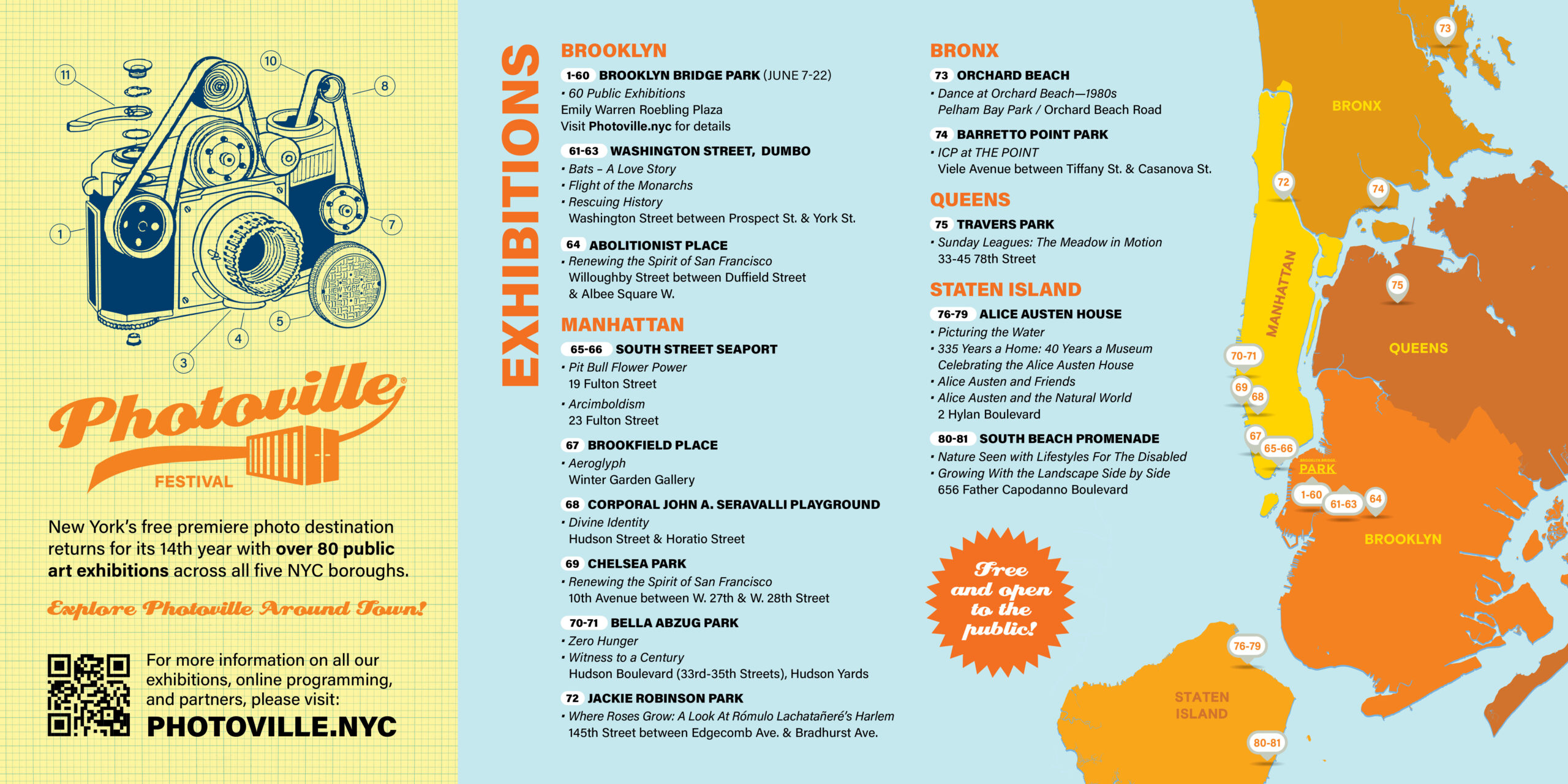
View Location Details Download a detailed map of this location Brooklyn Bridge Park – Emily Warren Roebling Plaza1 Water St
Brooklyn, NY 11201
This location is part of Brooklyn Bridge Park
Explore other locations and exhibitions nearby
The views and opinions expressed in this exhibit are those of the exhibition artists and partners and do not necessarily reflect the views or positions of Photoville or any other participants and partners of the Photoville Festival.
The 1492/1619: American Aftermaths grants were made possible by the generous support of the Jonathan Logan Family Foundation, MPB, and The Aftermath Project’s board of directors.