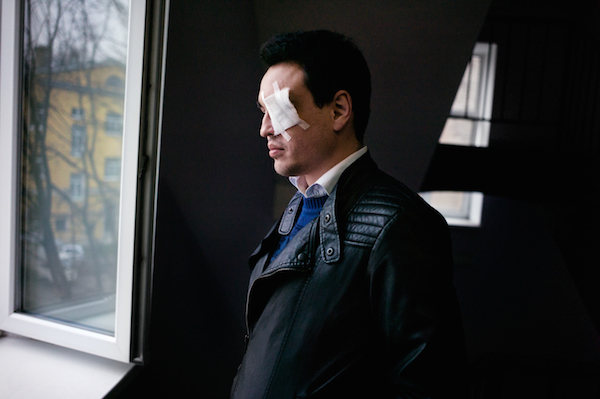
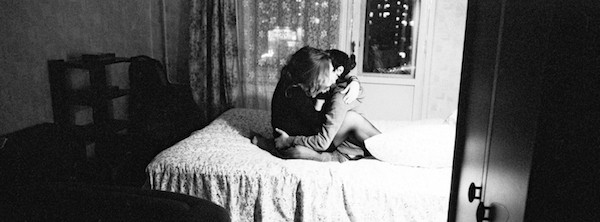
Being gay in Russia is lonely and dangerous. Homophobic rhetoric is encouraged by the state. Violence and discrimination are tolerated. Although homosexuality was decriminalized in Russia more than 20 years ago, it remained classified as a mental disorder until 1999. Recently, homophobia has become more virulent.
According to a recent official poll, 80% of respondents opposed gay marriage. 41% said they support discrimination based on sexual orientation. 20% consider gay people dangerous and said they should be “isolated from society.” Only 3% said LGBT people should be able to raise children.
An amendment to Russia’s Child Protection law passed in June 2013 criminalizes what it calls “propaganda of non-traditional sexual relations among minors.” Its ambiguity and selective use effectively make it illegal for any kind of gay event to take place or to even mention acceptance of homosexuality in public.
With a significant increase in hate crimes, hundreds of LGBT Russians are asking for asylum in the United States.
Photographer Misha Friedman documents how members of the LGBT community live under these conditions. They are prisoners in their own homes, hiding their identities, afraid to live a full life while looking for hope elsewhere.
Artist Bios
-
Misha Friedman
Misha Friedman was born in Moldova in 1977, and graduated with degrees from Binghamton University and London School of Economics, where he studied economics and international relations. He worked in corporate finance and later in humanitarian medical aid while teaching himself photography. Friedman’s analytical approach to storytelling involves trying to look beyond the facts, searching for causes, and asking complex and difficult questions. Sometimes he succeeds.
Friedman regularly collaborates with leading international media and non-profit organizations, including the New Yorker, Time Magazine, Sports Illustrated, Amnesty International, and Doctors Without Borders. His widely-exhibited work has received numerous industry awards, including multiple grants from the Pulitzer Center on Crisis Reporting. Friedman lives in New York City.
Organizations
-

Pulitzer Center
The Pulitzer Center makes possible in-depth reporting on important systemic issues, from climate change to health to the impact of AI. We make sure that the journalism reaches the right audiences to inspire curiosity, understanding, and action.
Our grants, trainings, and tools support more than 200 journalism projects each year, published by hundreds of news outlets all over the world. Over our 20-year history, that adds up to 11,000 stories illuminating some of the most urgent, complex issues facing the world today, and the intersections between them.
The journalism we support has led to the repeal of harmful laws, helped change government programs, and borne witness to events and atrocities that otherwise would be hidden from public scrutiny—and garnered the industry’s top accolades, including Pulitzer Prizes and Emmy awards.
Journalism also is a driver of civic engagement. We connect our projects to classrooms, communities, and public forums worldwide, extending impact far beyond publication. As the ways people get their information change, our impact-driven, audience-driven approach is even more necessary for a healthy society.
Breakthrough Journalism, Stronger Communities. That’s been our mission and our passion for two decades. We’re excited to see what the next 20 years bring.
The Iron Closet
Featuring: Misha Friedman
Curated by: Evey Wilson
Locations
View Location Details Download a detailed map of this location Brooklyn Bridge Park – Emily Warren Roebling Plaza1 Water St
Brooklyn, NY 11201
This location is part of Brooklyn Bridge Park
Explore other locations and exhibitions nearby
Related Events
Photography and the Battle for Global LGBT Rights
Join the Pulitzer Center on Crisis Reporting for this panel convening photographers who are documenting LGBT communities in Russia, Uganda and North America.
Learn More