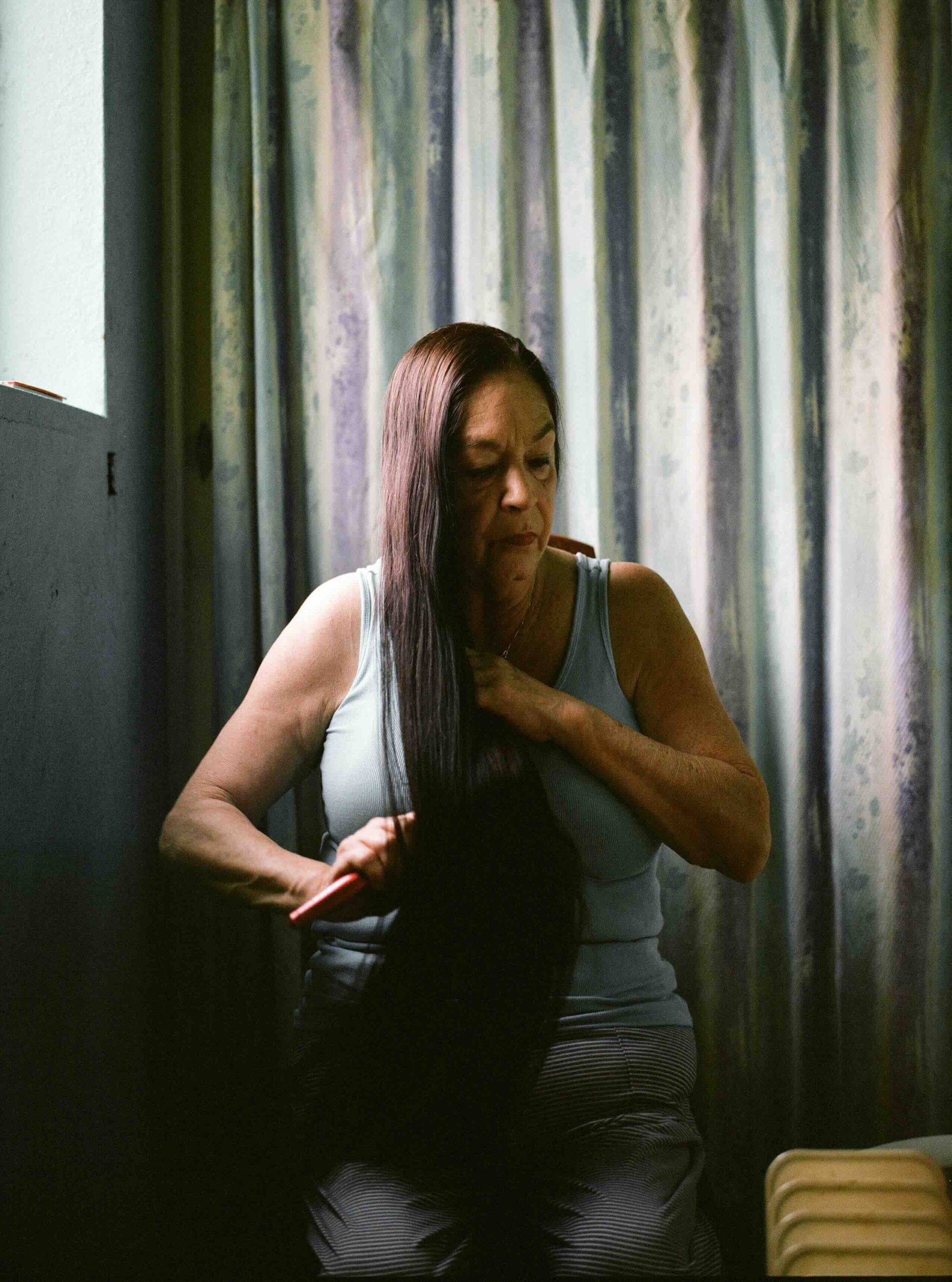
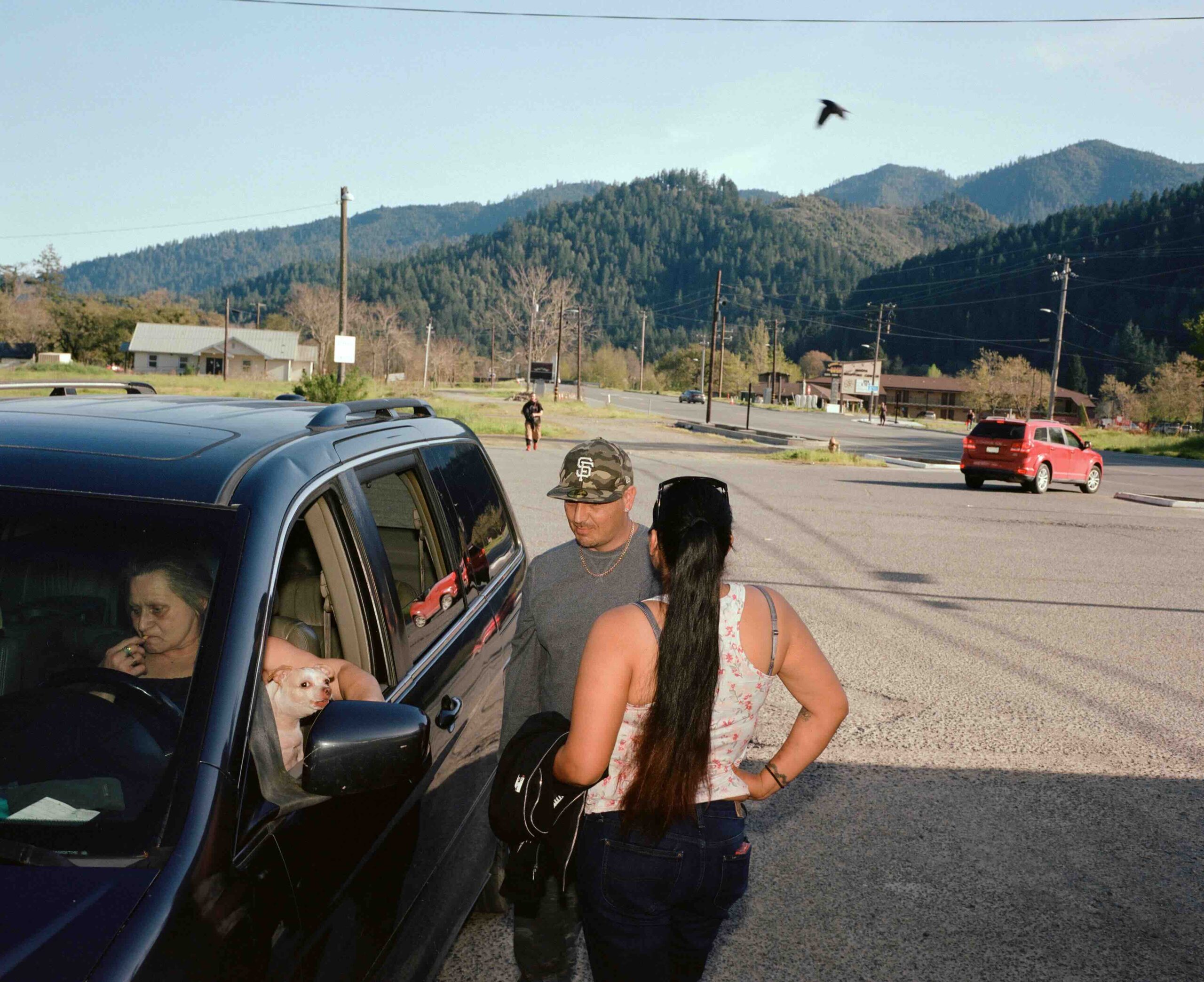
“I wish I could turn the clock back to B.D., or ‘before drugs.’ Before the opioid epidemic spread through our tribe like wildfire. Before my husband became addicted. Then two of my sons. Then my grandchild.”
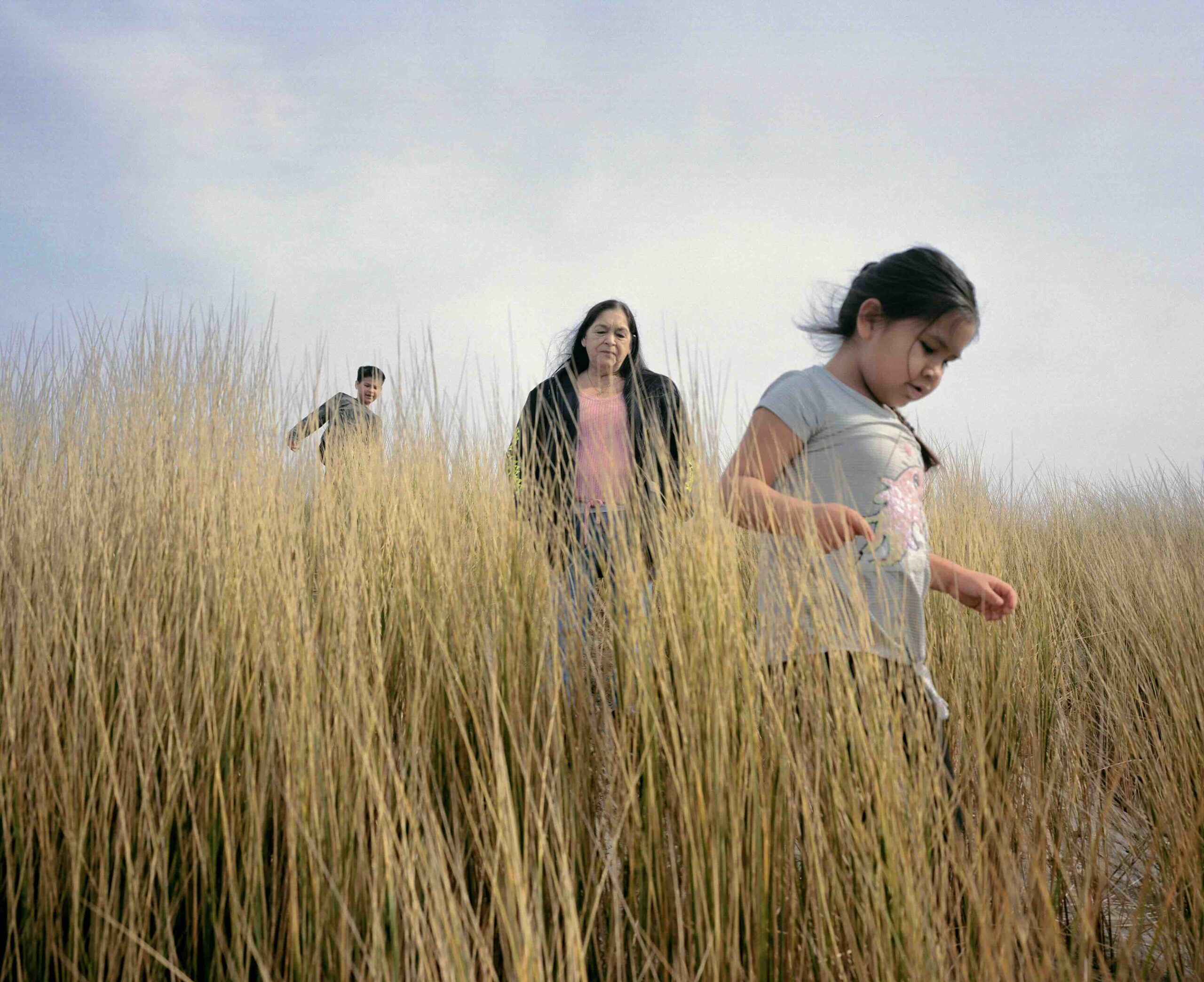
Judith Surber, a mother, Hoopa Valley Tribe member, and now manager of a medical assisted treatment program, writes of her experience with the opioid epidemic on the reservation. Justin Maxon uses film photography to present snapshots of Surber’s life while centering her voice throughout.
“When I think about my sons, Roger and Cory, I picture them as I do all my children, as precious babies. When I look at my sons, I see all that I’ve known them to be and all of what could have been or could still be if it weren’t for OxyContin, then heroin, and now fentanyl.”
Native populations experience some of the highest rates of drug overdose deaths in the U.S., according to the CDC.
“I had high hopes for my children and could not fathom what would happen to us when OxyContin came to the valley. The remoteness of this place has long protected us. But today the opioid crisis facing the nation has infiltrated our community, causing destruction and havoc along its path, leaving families like mine shattered.”
Surber gives a firsthand perspective of a mother fighting to keep her family together, while Maxon’s photographs are candid yet compassionate. Together, their written and visual storytelling weave a personal narrative of struggle, fear, and pain, but most of all, of unconditional love.
This story was originally published in partnership with The New York Times in November 2023.
Artist Bios
-
Justin Maxon
Justin Maxon is a photographer, writer, and filmmaker. He was born and raised in Northern California, where he grew up part-time on the Hoopa Valley Indian Reservation. As a visual storyteller, educator, and socially engaged artist, he collaborates with communities, making design and ideation decisions with participants. His work seeks to challenge authoritative systems of knowledge through repositioning members of society within the social hierarchy and understanding his own positionality. His work has received numerous awards and has appeared in publications including TIME, Rolling Stone, Newsweek, Mother Jones, and The New York Times.
-
Judith Surber
Judith Surber is a mother, grandmother, and tribal member of the Hoopa Valley Indian Reservation in Humboldt County, Northern California. Surber has worked for the Hoopa Valley Tribe for the past 30 years in many different capacities, including most recently as the manager for the Medication Assisted Treatment program at K’ima:w Medical Center, the Hoopa Valley Tribe’s health program. Surber is the author of Reservation High, a fiction book about Native life on the reservation, substance use, and recovery. Her second book, The Broken Ones, is a fiction work that explores Native life and trauma.
Organizations
-

Pulitzer Center
The Pulitzer Center makes possible in-depth reporting on important systemic issues, from climate change to health to the impact of AI. We make sure that the journalism reaches the right audiences to inspire curiosity, understanding, and action.
Our grants, trainings, and tools support more than 200 journalism projects each year, published by hundreds of news outlets all over the world. Over our 20-year history, that adds up to 11,000 stories illuminating some of the most urgent, complex issues facing the world today, and the intersections between them.
The journalism we support has led to the repeal of harmful laws, helped change government programs, and borne witness to events and atrocities that otherwise would be hidden from public scrutiny—and garnered the industry’s top accolades, including Pulitzer Prizes and Emmy awards.
Journalism also is a driver of civic engagement. We connect our projects to classrooms, communities, and public forums worldwide, extending impact far beyond publication. As the ways people get their information change, our impact-driven, audience-driven approach is even more necessary for a healthy society.
Breakthrough Journalism, Stronger Communities. That’s been our mission and our passion for two decades. We’re excited to see what the next 20 years bring.
Decolonizing Care
Featuring: Justin Maxon Judith Surber
Curated by: Daniel Vasta Katherine Jossi Sarah Swan Grace Jensen
Locations
ON VIEW AT: Truss Banner 40
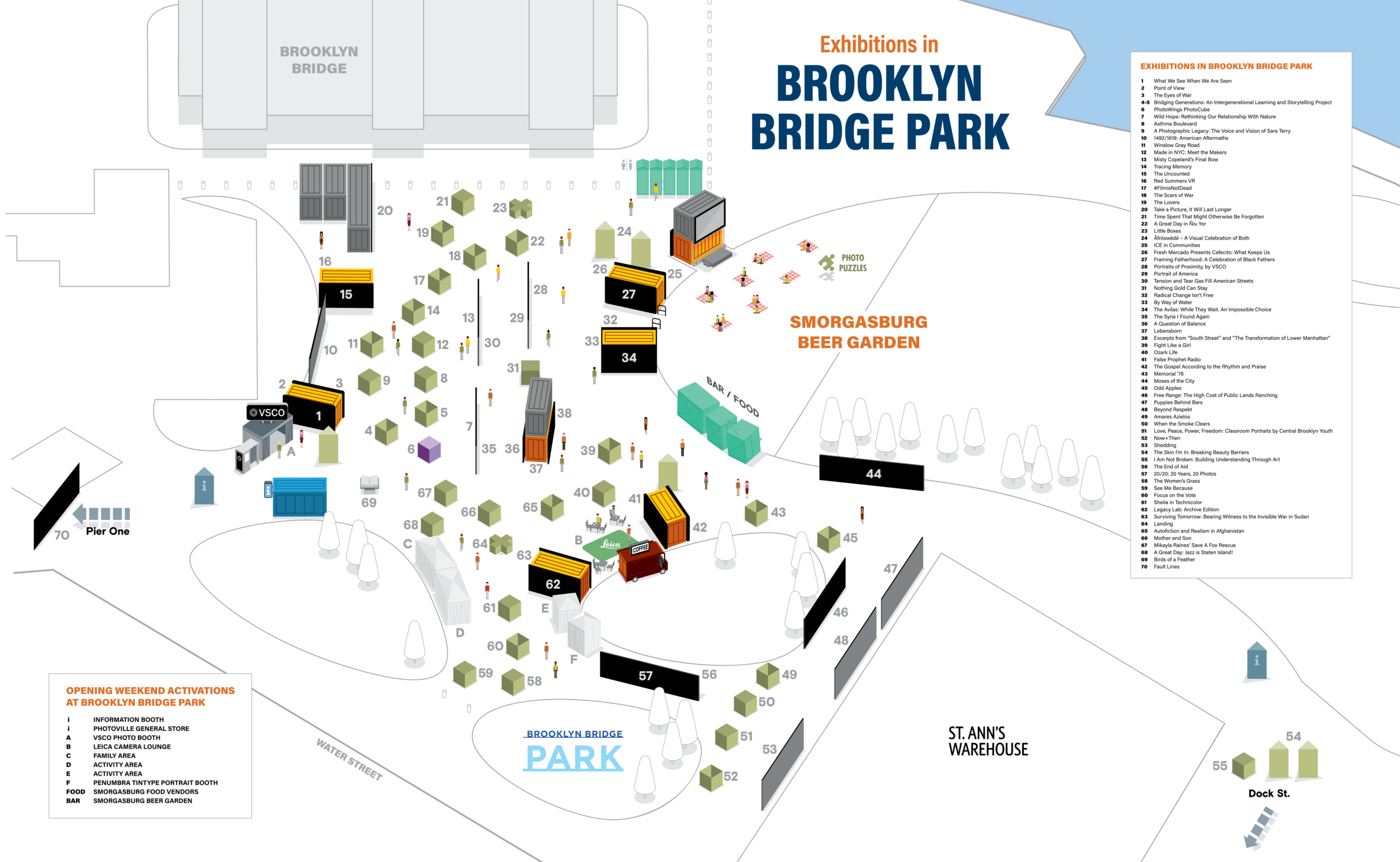
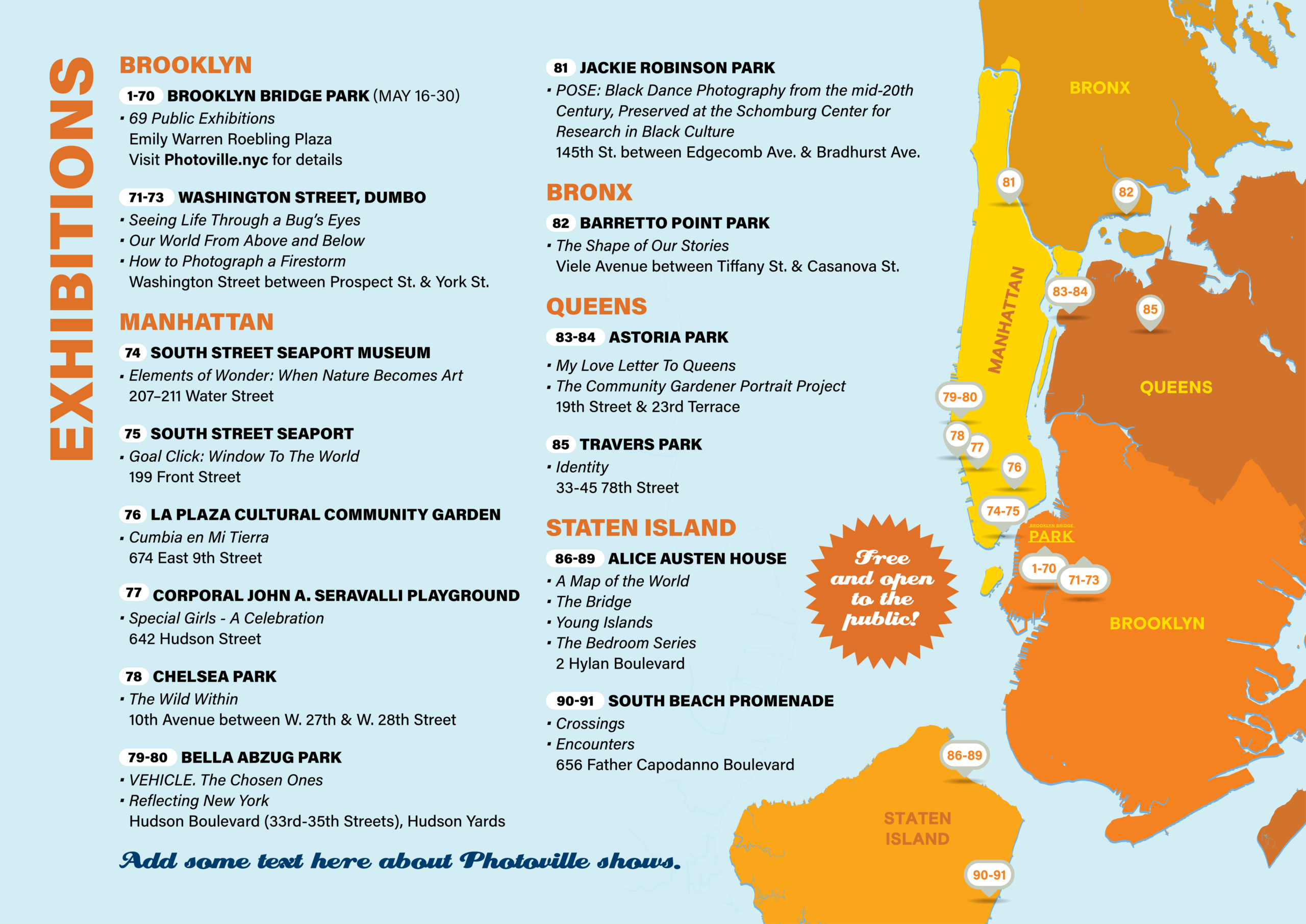
View Location Details Download a detailed map of this location Brooklyn Bridge Park – Emily Warren Roebling Plaza1 Water St
Brooklyn, NY 11201
This location is part of Brooklyn Bridge Park
Explore other locations and exhibitions nearby
Written by Judith Surber. Photographed by Justin Maxon.
Related Events
Photoville Education Field Trip: Justin Maxon’s “Decolonizing Care”
Artist talk with Justin Maxon on his work “Decolonizing Care”
Learn More